Prologue
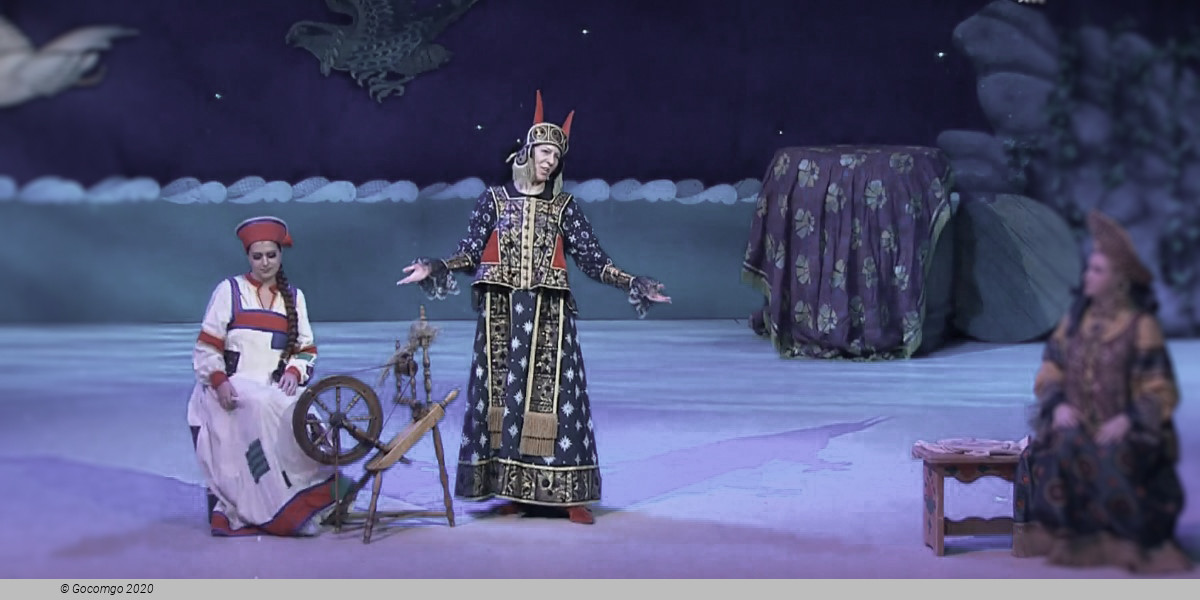
On a winter evening, two girls are dreaming of meeting a rich groom. While they are making plans, the care for their beauty lies on the shoulders of their younger sister, Militrisa. She is not treated well in the family: ‘Why shouldn’t we order that silly girl around?’ The witch Old mother Babarikha is watching the scene.
The elder sisters, encouraged by Old mother Babarikha, praise themselves and dream about what each of them would do if she suddenly became a Tsar's wife.
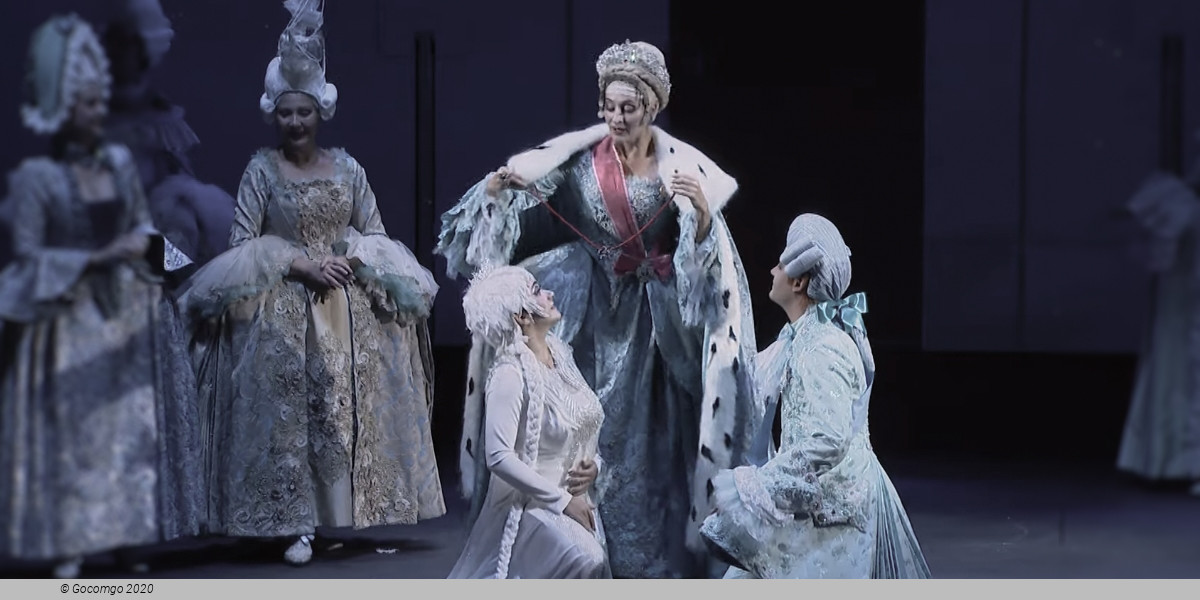
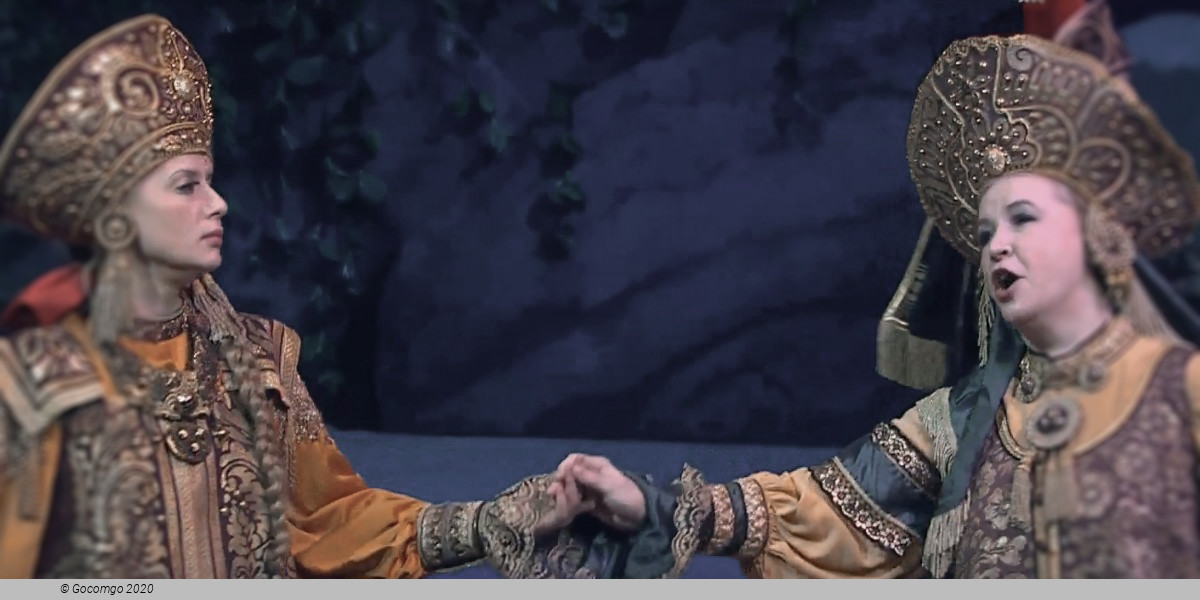
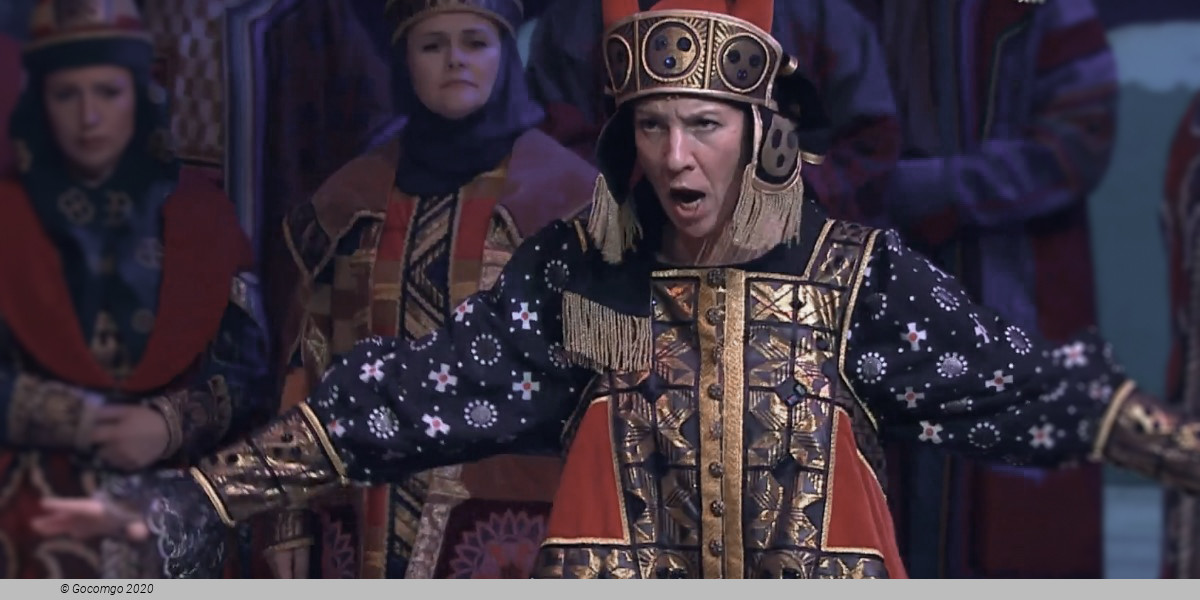
Tsar Saltan is listening to the conversation of the sisters. The eldest promises to arrange a feast for the whole world, the middle one promises to weave canvases, and Militrisa promises 'to bear a bogatyr for our father the Tsar'. The Tsar leaves his shelter and tells everyone to follow him to the palace. Militrisa is to become the Tsaritsa, and her sisters are to be the Cook and the Weaver. The sisters are annoyed and ask Babarikha to help them take revenge on Militrisa. Babarikha proposes a plan: when the Tsar leaves for war, and the Tsaritsa gives birth to a son, they will send a letter to the Tsar instead of joyful news: ‘Last night the Tsaritsa gave birth to something neither quite male nor female, to something neither quite mouse nor frog, but a creature unknown to man’. The sisters apprehend their victory.
Act One
The scene pictures the tsar's courtyard by the seashore in Tmutarakan. Courtiers and common people are celebrating the wedding of Saltan and Militrisa. The happiness of the newlyweds does not last long though: Saltan changes his wedding suit to armor and goes to war.
Militrisa is sad in the palace, alone among strangers. Nannies are rocking her newborn son Guidon to sleep. The sisters send the Jester to the Tsaritsa to wake the baby with loud singing.
The baby wakes up. Nannies play patty-cake with him. The courtyard is filled with people. Everyone admires the Tsarevich. The choir sings toasts to him and the Tsaritsa. Pushing the crowd away, the drunken Messenger bursts in with a letter from the Tsar. He complains to the Tsaritsa about how poorly he was received by Tsar Saltan, and talks about a hospitable grandmother who fed him well and got him drunk. The scribes read the royal letter: ‘The Tsar orders his boyars without any further ado, to cast away the Tsaritsa and her offspring in a barrel into the watery deep’. Everyone is astonished. In despair Militrisa submits to the will of the Tsar and asks to bring Guidon, who has already grown noticeably.
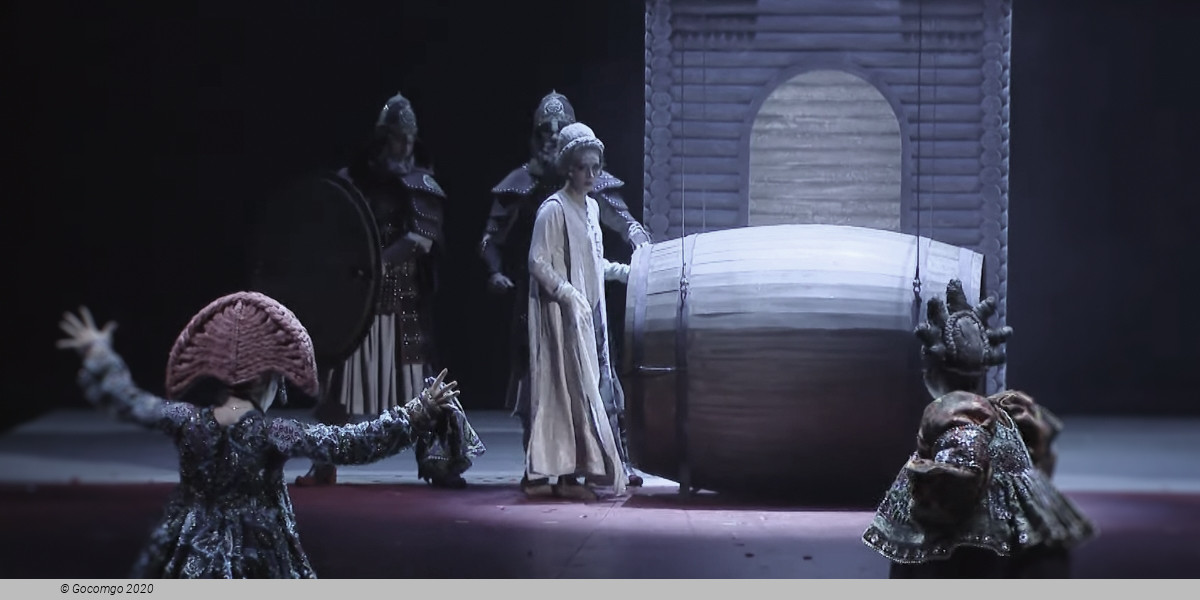
To the lamentations of the people, the Tsaritsa and her son are put into a barrel. The cry of the crowd merges with the noise of oncoming waves.
Act Two
The inhabitants of the underwater world carefully accompany the barrel swinging on the waves to the shore of Buyan Island. Suddenly an evil sorcerer appears in the image of a kite. He tries to sink the barrel, but the Swan, who has come to the rescue, drives the villain away.
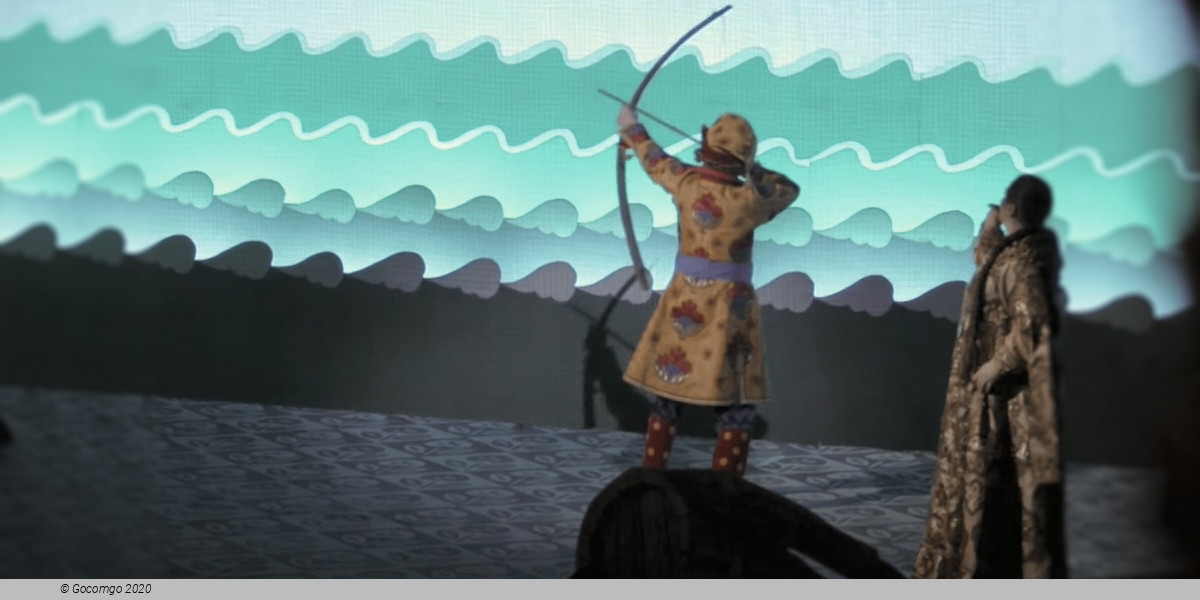
The sea calms down and throws the barrel on the deserted shore. Militrisa and the matured Tsarevich come out of it. They celebrate their salvation, but the Tsaritsa is worried: ‘the isle is barren and wild.’ Guidon calms down his mother, and she makes a bow for her son and anxiously lets him go hunting.
Suddenly, a noise of a struggle and a groan is heard: the Kite has returned, accompanied by evil spirits, to take revenge on the Swan and kill it.
Militrisa directs her son’s bow, Guidon takes aim and fires an arrow. The amazed Tsaritsa and Tsarevich see the Swan, who gratefully addresses her savior Guidon, promising to return his fabour, and reveals her secret: ‘For it was not a swan that you saved, but a young maiden whose life you spared. It was not a kite that you slayed, but a sorcerer that you shot down.’
The Swan advises them not to grieve, but to go to sleep. Militrisa and Guidon decide to follow the advice.
Dawn comes. The fabulous city of Ledenets appears from the morning mist. The Tsaritsa and the Tsarevich wake up, admire the vision, and then Guidon realizes: ‘I see my swan is amusing herself!’ Jubilant people emerge from the gates of the city, thanking Guidon for sparing them from the evil sorcerer, and ask him to rule the glorious city of Ledenets.
Joyful people diverge, leaving Guidon alone with sad thoughts about his father. Sailors appear. Guidon asks them to give his regards and a gift to Saltan and to invite him to visit Buyan. The Sailors depart for Tmutarakan. Guidon stares after them with longing. He complains to the Swan that he is bored with all the wonders of the Isle, and that he wants to see his father, but remain invisible. The Swan agrees to fulfill his request and orders the Tsarevich to immerse into the sea three times to turn into a bumblebee. Guidon flies off to catch up with the ship.
Act Three
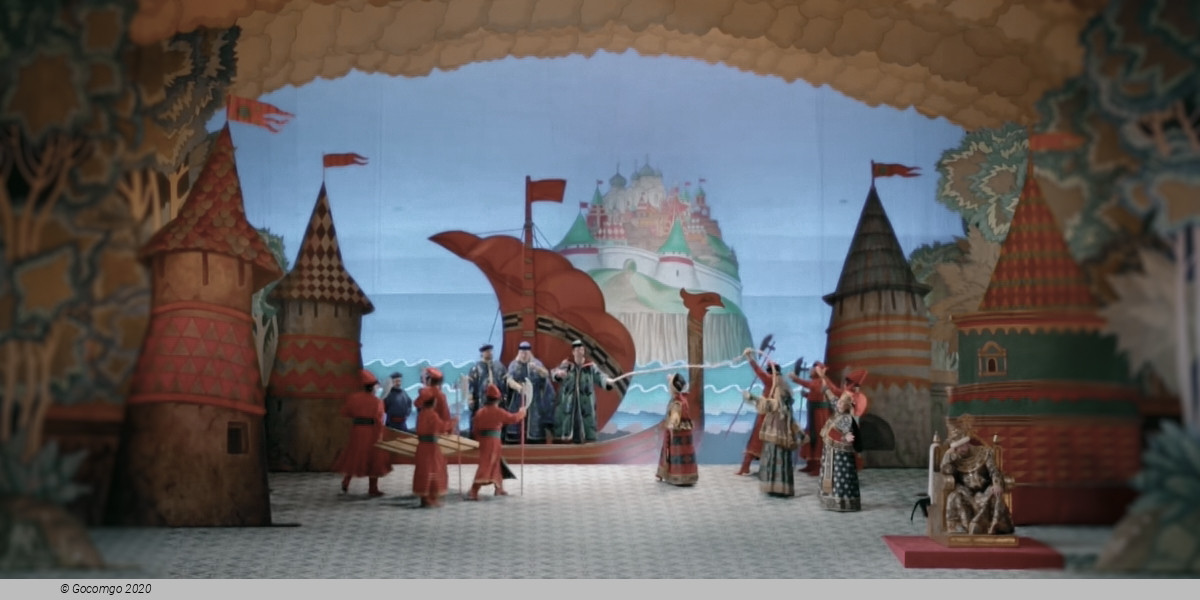
The ship is mooring to the seashore of Tmutarakan. Saltan invites the Sailors to his palace to the apparent displeasure of Babarikha and the sisters. The travelers notice how sad the Tsar is and how sad is his household.
In gratitude for the invitation, the guests speak of the miracles they have seen in the world: the transformation of a deserted island into the beautiful city of Ledenets, where there is a squirrel that can gnaw gold nuts and sing songs, and thirty-three bogatyrs. Then they pass Prince Guidon’s regards. The Cook and the Weaver try to make the Tsar drink witchcraft potion and to distract his attention with other stories. The bumblebee is angry at his aunts and stings each in an eyebrow. Tsar Saltan certainly wants to go to the wonderful island.
Then Babarikha starts a story about the most amazing of miracles: about a princess so beautiful that ‘during the day she outshines the daylight, at night she illuminate the earth.’ The bumblebee stings Babarikha in the eye. Complete uproar begins, but it is not possible to catch the bumblebee.
A shore of Buyan. It’s evening. Guidon dreams of a beautiful princess. He calls the Swan, confesses his love for the princess and asks to find her. The Swan does not immediately fulfill his request: she doubts his feeling. But Guidon insists, he is ready to search for his beloved even in the most distant lands. And finally the Swan says: ‘What sense in searching far away? Let me tell you with a deep sigh: know that your destiny is nigh, I am that princess!’ In the thickening darkness, the Swan-Princess appears in all the dazzling brilliance of her beauty.
In the morning, Tsaritsa Militrisa comes to the seashore. Guidon and the Princess ask her to give consent to the marriage. Militrisa blesses them.
Buyan reveals its wonders.
The ship of Tsar Saltan disembarks on the Island. The Tsar is accompanied by the Cook, the Weaver, and Babarikha.
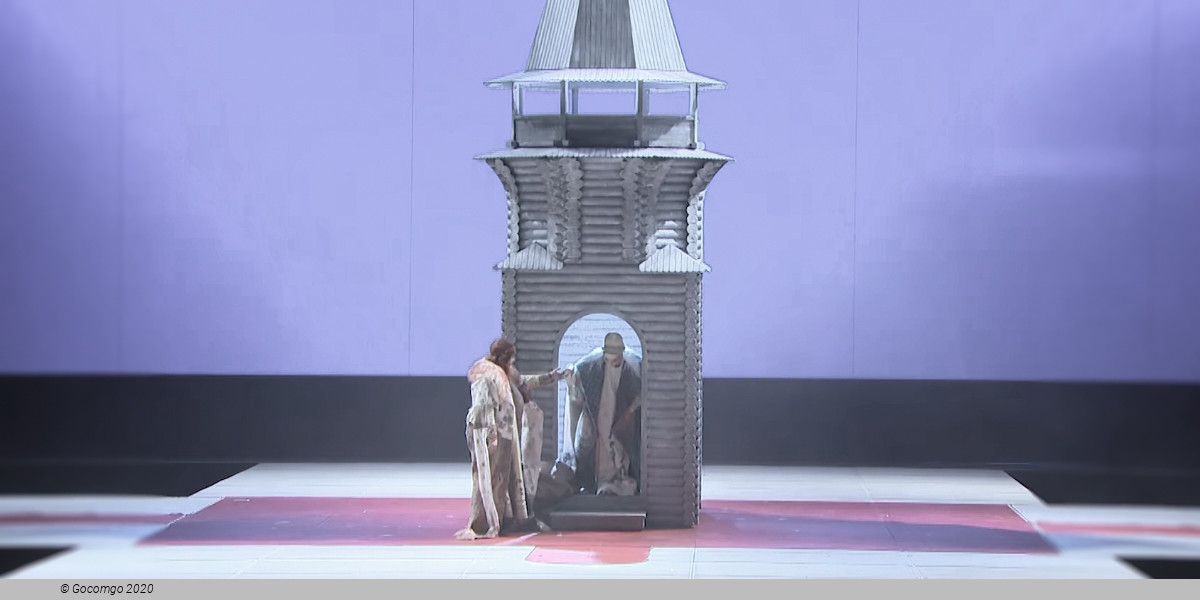
Guidon greets the guest, and at the Tsar’s request demonstrates him the wonders of the island: the squirrel gnawing nuts, the bogatyrs emerging from the sea, and the Swan-Princess shining in all her glory. Everyone is blinded by her beauty. Saltan is thrilled. He asks the Swan to resurrect Tsaritsa Militrisa with her magic. ‘Behold the tower house! The Swan replies. The Tsaritsa appears on the porch.
The king asks about his son. Guidon comes forward: ‘It is I!’
By the will of the Swan-Princess, the evil charms of Babarikha are destroyed. The Cook and the Weaver fall at the feet of Tsar Saltan, begging for forgiveness. In jubilation, the Tsar forgives everyone and arranges a glorious feast.
Time: Unspecified
Place: Partly in the city of Tmutarakan and partly on the island of Buyan
Prologue
On a wintry evening three sisters are sitting at spinning wheels. As Tsar Saltan overhears from outside the door, the oldest sister boasts that, if she were Tsaritsa (the bride of the Tsar), she would prepare a sumptuous feast; the middle sister would weave a grand linen; the youngest promises to bear, as son for the Tsar, a bogatyr (warrior-knight). Saltan enters, chooses the third sister to be his bride ("Zdravstvuy, krasnaya devitsa!" = "Greetings, beautiful girl!"), and takes her away. The old woman Babarikha devises a revenge for the two jealous older sisters ("Nu, tak slushat, ne meshat" = "Then listen well and don’t interrupt"): when the Tsar is away at war, a message will be sent to him that the child born to his Tsaritsa is not human, but a monster.
Act 1
Introduction — Saltan’s Departure
Scene
The Tsar has gone off to war. In his palace in Tmutarakan, the Tsaritsa has given birth to a son, to whom a chorus of nannies sings a lullaby ("Bayushki, bayushki!"). She is despondent: there is no reply from her husband to the news of the birth of their child. Her sisters are (with Babarikha) now part of the court: the older sister as Cook, and the middle sister as Weaver. (They have secretly replaced the message of the Tsaritsa to her husband with news of her son's birth with another message: it said that she has borne neither a daughter nor a son, neither a mouse nor a frog, but a kind of monster.) They try to entertain her, as does the skomorokh (jester) and the old man ("Gosudarynya, tsaritsa, matushka" = "Your highness, queen, mother"). But all this is to no avail. The young Tsarevich baby, who has been lulled to sleep during this scene, awakens and runs about, accompanied by his nurses, and the people wish God's blessings upon him. Then a messenger stumbles in, having been waylaid with drink by Babarikha. He sings "Gosudarynya moya, ne veli kaznit menya" ("Your highness, don’t punish me"), and his message from the Tsar is read by the scribes: the Tsaritsa and her progeny must be placed in a barrel and thrown into the sea. Reluctantly the people carry out the Tsar's command.
Act 2
Introduction — Militrisa and Gvidon Afloat In the Barrel
Scene
The Tsaritsa and her son Gvidon have landed on the island of Buyan, and broken out of the barrel in which they were trapped. Gvidon, who has grown remarkably rapidly into a young man, is searching for sustenance. While doing this, he rescues a swan from being killed by a kite. in gratitude, the Swan-Bird sings to him ("Ty, tsarevich, moy spasitel" = "You, Prince, my Saviour"). The Tsaritsa explains Gvidon's early history to her son, and the Swan-Bird causes the city of Ledenets (Russian: Леденец, "lollipop") to arise magically on the island. Gvidon is hailed by its inhabitants as its Prince.
Act 3
Scene 1
By the shore of Buyan, the merchant ships have left, and Gvidon laments having being separated from his father ("Veter po moryu gulyayet" = "The wind blows over the sea"). The Swan-Bird will help him by changing him into a bumblebee. He will be able to fly over the sea, as a stowaway on Saltan's ship, to visit him (incognito) in Tmutarakan.
Interlude — Flight of the Bumblebee
Scene 2
The sailors arrive at Tmutarakan from their visit to Buyan. The sailors tell Tsar Saltan of the wonders of Gvidon's island (the magically appearing city itself, a magic squirrel, and the thirty-three bogatyrs from the sea). The two older sisters are concerned that the Tsar will become interested in visiting the island, and they try to dissuade him. In retaliation the bumble-bee Gvidon stings each of them in the brow. Babarikha then tries to trump the sailors, by speaking of a fabulous Princess on the sea, at which point Gvidon stings her in the eye and blinds her. Saltan decides to visit the island, but, in view of the havoc caused by the bumblebee, forbids that breed of insect from ever entering the palace again.
Act 4
Scene 1
Gvidon, again by the seashore of Buyan, longs for a bride ("V sinem more zvyozdy bleshchut" = "Over the blue sea stars shine"). The Swan-Bird appears, and Gvidon tells her of the Princess that he heard about at Tmutarakan. The Swan-Bird transforms herself into that very Princess. His mother and a chorus of maidens enter, and bless the prospect of their wedding.
Orchestral interlude — Three Wonders
Scene 2
Gvidon, with his mother hidden, awaits the arrival of Saltan. When the ship arrives with the Tsar and his retinue, Gvidon greets him, and questions him as to whether or not he will have a son to carry on his work. The Saltan does not yet know that Gvidon is his son ("Akh, moguchiy knyaz Gvidon" = "Ah, mighty Prince Gvidon"), and expresses regret for his rash treatment of his wife many years earlier. Although Gvidon tries to cheer him up with the three wonders, it becomes clear that only the presence of Militrisa can assuage Saltan's guilt. The Princess-Swan (Lyebyed) appears and reveals the Tsar's long-lost wife. The older sisters beg forgiveness, which in his happiness Saltan grants. Everyone then joins in a celebration of the upcoming wedding of Gvidon and the Princess-Swan.









 Teatralnaya Square 1