
Grosses Festspielhaus tickets 6 August 2026 - Premiere Così fan tutte | GoComGo.com

Premiere
Così fan tutte

Grosses Festspielhaus, Salzburg, Austria
All photos (6)
Select date and time
6:30 PM

E-tickets: Print at home or at the box office of the event if so specified. You will find more information in your booking confirmation email.

You can only select the category, and not the exact seats.
If you order 2 or 3 tickets: your seats will be next to each other.
If you order 4 or more tickets: your seats will be next to each other, or, if this is not possible, we will provide a combination of groups of seats (at least in pairs, for example 2+2 or 2+3).

Important Info
Type: Opera
City: Salzburg, Austria
Starts at: 18:30
Acts: 2
Duration: 2h 15min
Sung in: Italian
Titles in: German,Italian

E-tickets: Print at home or at the box office of the event if so specified. You will find more information in your booking confirmation email.

You can only select the category, and not the exact seats.
If you order 2 or 3 tickets: your seats will be next to each other.
If you order 4 or more tickets: your seats will be next to each other, or, if this is not possible, we will provide a combination of groups of seats (at least in pairs, for example 2+2 or 2+3).

Cast
Performers
Conductor: Joana Mallwitz
Baritone: Andrè Schuen (Guglielmo)
Orchestra: Vienna Philharmonic
Tenor: Bogdan Volkov (Ferrando)
Choir: Concert Association of the Vienna State Opera Chorus
Soprano: Elsa Dreisig (Fiordiligi)
Baritone: Johannes Martin Kränzle (Don Alfonso)
Mezzo-Soprano: Lea Desandre (Despina)
Mezzo-Soprano: Viktoria Karkacheva (Dorabella)
Creators
Composer: Wolfgang Amadeus Mozart
Director: Christof Loy
Sets: Johannes Leiacker
Librettist: Lorenzo Da Ponte
Light: Olaf Winter
Festival

Salzburg Festival Summer 2026

The Salzburg Festival Summer 2026 invites you into a world where music, theatre, and emotion merge into one unforgettable cultural journey. From July 17 to August 30, 2026, the baroque city of Salzburg becomes a living stage, hosting more than a hundred performances across historic venues, where every evening feels like a premiere of beauty itself.

Overview

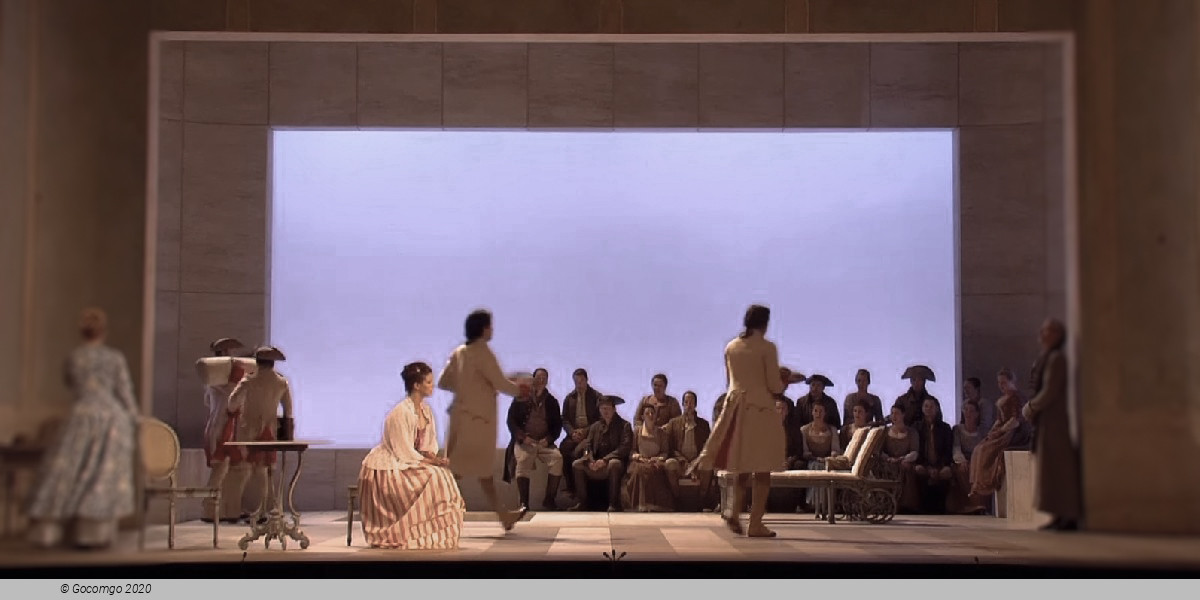
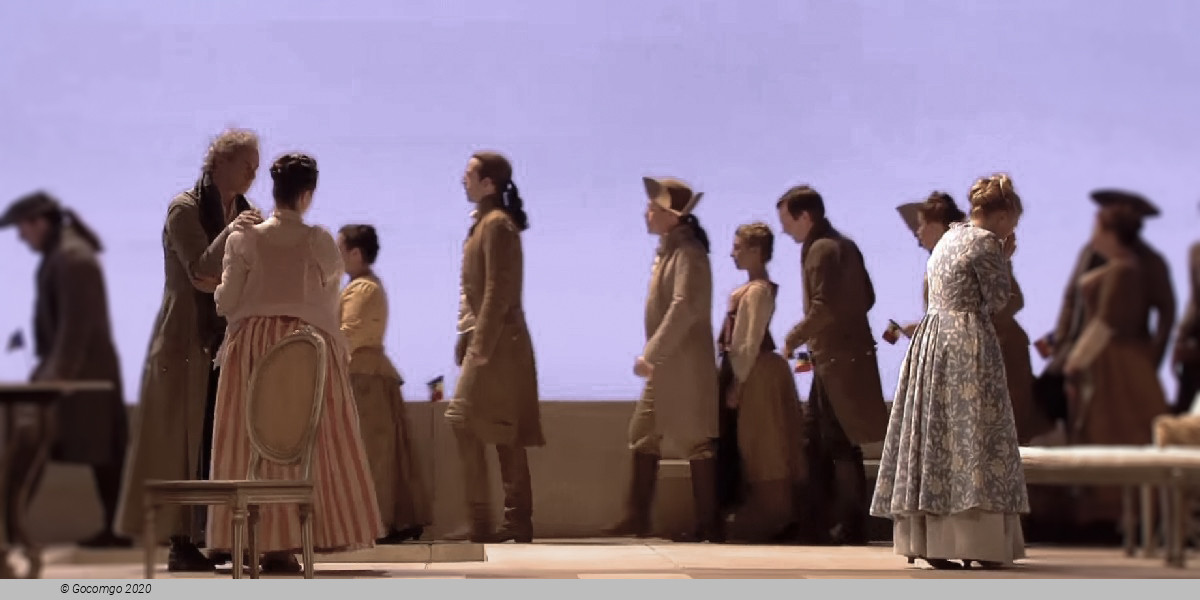
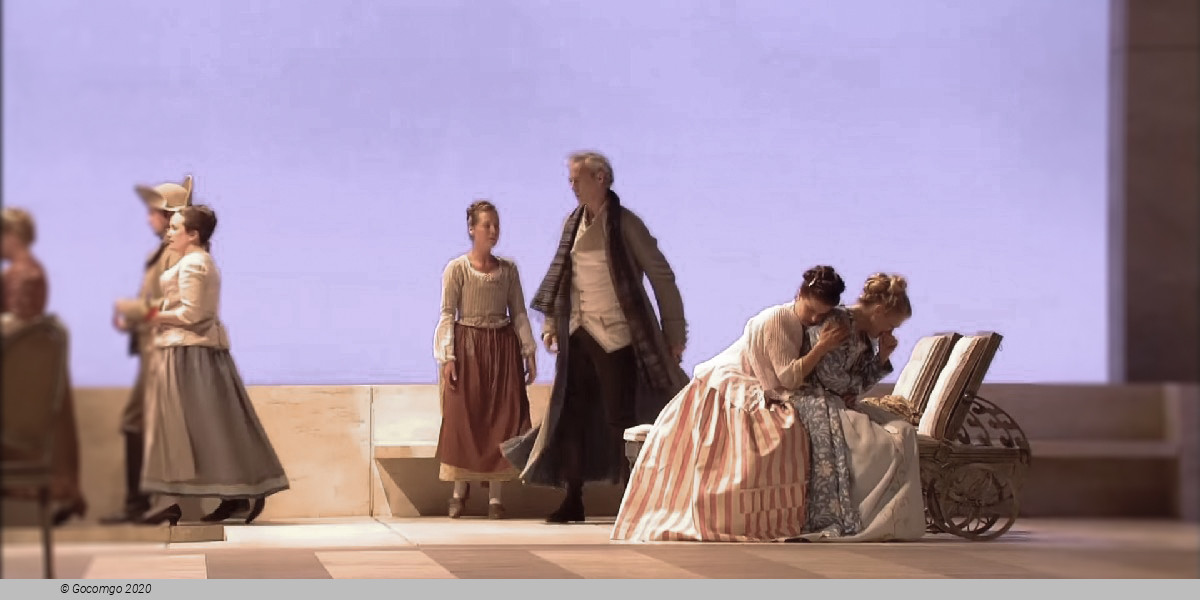
Expanded revival. "How my destiny has changed all in an instant! Life has become a sea of torment for me!"

Composed in 1789, shortly after the storming of the Bastille and in the final months of the reign of Joseph II, Così fan tutte reflects the full flowering of the ancien régime immediately before its collapse.

It all begins in a coffee house in Naples – a place full of ambivalence, where the beauty of the landscape contrasts starkly with the ever-present threat from Vesuvius. And it’s in this atmosphere of tension that the ensuing story unfolds, with consequences that will unsettle all characters alike.

Disillusioned by love, Don Alfonso explains his philosophy: ‘Fidelity in women is like the Arabian phoenix; everyone says that it exists, but no one has ever seen it.’ With this assertion he provokes Ferrando and Guglielmo, who are both in love, to make a wager: an experiment set up by Don Alfonso will test the faithfulness of their fiancées Dorabella and Fiordiligi. Don Alfonso’s aim, however, does not merely concern the issue of faithfulness: he wants to reveal the relativity of love – and prove that the emotion people believe is unshakeable is in fact subject to the laws of play, deception and chance.

What starts out as a parlour game develops into a pitiless experiment. Hearts are taken apart, dissected and put together anew; the couples enter the vertiginous zone of love. All four characters become strangers to themselves: Fiordiligi, who initially seems unshakeable, is overwhelmed by a passion that both delights and dismays her; Dorabella seems to effortlessly welcome the new situation, but this ease betrays knowledge of the heart’s fragility; the men who think they are setting the rules ultimately find themselves tested, their own vows devalued. Even Don Alfonso is no longer able to preserve his position as impartial observer. During the course of the action all familiar co-ordinates will give way, every certainty be suspended.

Despina, Don Alfonso’s ally, shows the two women a way out of the crisis. She has come to terms with the world of uncertainty and faithlessness. For her, love is an amusement and a diversion: ‘One man is worth the same as any other, for no man is worth anything.’ But her wisdom is not that of the opera! Così fan tutte moves in entirely different dimensions: it explores the question of how our humanity can be saved – despite the events that may seem to confirm Despina’s view of things.

The enigmatic truth of the libretto only reveals itself fully through Mozart’s music: he does not compose with alienating irony, nor consign human relationships to mockery by representing them as mechanistic and marionette-like. Instead, he touches the beating heart of the action and through this the deep mystery of love.

The music develops a unifying power without denying what has happened. The conflicting elements are reunited without force: all the protagonists are aware of the suffering and tears they have gone through. But through their painful experience they have attained serenity and a kind of harmony of the heart. Laughing and weeping appear as equals. The musical depiction of the ‘bella calma’ that has been achieved contains not a trace of irony.

All the protagonists are able to return to themselves with a deeper knowledge of the world – perhaps accompanied by the gentle question that concludes Heinrich von Kleist’s essay On the Puppet Theatre from 1810: ‘Does that mean that we must eat again of the tree of knowledge in order to return to the state of innocence?’

Yvonne Gebauer

Translation: Sophie Kidd

History
Premiere of this production: 26 January 1790, Burgtheater, Vienna

Così fan tutte, ossia La scuola degli amanti (All Women Do It, or The School for Lovers), is an Italian-language opera buffa in two acts by Wolfgang Amadeus Mozart first performed on 26 January 1790 at the Burgtheater in Vienna, Austria. The libretto was written by Lorenzo Da Ponte who also wrote Le nozze di Figaro and Don Giovanni.

Synopsis

Mozart and Da Ponte use the theme of "fiancée swapping", which dates back to the 13th century; notable earlier versions are found in Boccaccio's Decameron and Shakespeare's play Cymbeline. Elements from Shakespeare's The Taming of the Shrew are also present. Furthermore, it incorporates elements of the myth of Procris as found in Ovid's Metamorphoses, vii.

Place: Naples
Time: the 18th century

Act 1
Scene 1: A coffeehouse

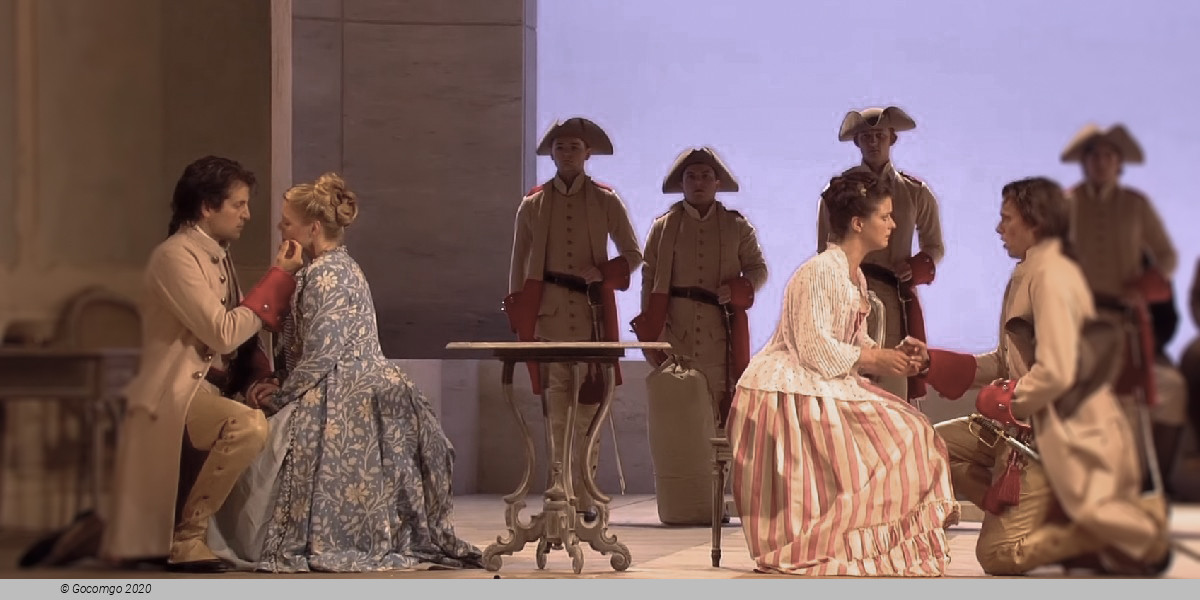
In a cafe, Ferrando and Guglielmo (two officers) express certainty that their fiancées (Dorabella and Fiordiligi, respectively) will be eternally faithful. Don Alfonso expresses skepticism and claims that there is no such thing as a faithful woman. He lays a wager with the two officers, claiming he can prove in a day's time that those two, like all women, are fickle. The wager is accepted: the two officers will pretend to have been called off to war; soon thereafter they will return in disguise and each attempt to seduce the other's lover. The scene shifts to the two women, who are praising their men (duet: "Ah guarda sorella"—"Ah look sister"). Alfonso arrives to announce the bad news: the officers have been called off to war. Ferrando and Guglielmo arrive, brokenhearted, and bid farewell (quintet: "Sento, o Dio, che questo piede è restio"—"I feel, oh God, that my foot is reluctant"). As the boat with the men sails off to sea, Alfonso and the sisters wish them safe travel (trio: "Soave sia il vento"—"May the wind be gentle"). Alfonso, left alone, gloatingly predicts that the women (like all women) will prove unfaithful (arioso: "Oh, poverini, per femmina giocare cento zecchini?"—"Oh, poor little ones, to wager 100 sequins on a woman").

Scene 2: A room in the sisters' home

Despina, the maid, arrives and asks what is wrong. Dorabella bemoans the torment of having been left alone (aria: "Smanie implacabili"—"Torments implacable"). Despina mocks the sisters, advising them to take new lovers while their betrotheds are away (aria: "In uomini, in soldati, sperare fedeltà?"—"In men, in soldiers, you hope for faithfulness?"). After they leave, Alfonso arrives. He fears Despina will recognize the men through their disguises, so he bribes her into helping him to win the bet. The two men then arrive, dressed as mustachioed Albanians (sextet: "Alla bella Despinetta"—"Meet the pretty Despinetta"). The sisters enter and are alarmed by the presence of strange men in their home. The "Albanians" tell the sisters that they were led by love to them (the sisters). However, the sisters refuse to give in. Fiordiligi asks the "Albanians" to leave and pledges to remain faithful (aria: "Come scoglio"—"Like a rock"). The "Albanians" continue the attempt to win over the sisters' hearts, Guglielmo going so far as to point out all of his manly attributes (aria: "Non siate ritrosi"—"Don't be shy"), but to no avail. Ferrando, left alone and sensing victory, praises his love (aria: "Un'aura amorosa"—"A loving breath").

Scene 3: A garden

The sisters are still pining. Despina has asked Don Alfonso to let her take over the seduction plan. Suddenly, the "Albanians" burst in the scene and threaten to poison themselves if they are not allowed the chance to woo the sisters. As Alfonso tries to calm them, they drink the "poison" and pretend to pass out. Soon thereafter, a "doctor" (Despina in disguise) arrives on the scene and, using magnet therapy, is able to revive the "Albanians". The men, pretending to hallucinate, demand a kiss from Dorabella and Fiordiligi (whom the "Albanians" call goddesses) who stand before them. The sisters refuse, even as Alfonso and the doctor (Despina) urge them to acquiesce.

Act 2
Scene 1: The sisters' bedroom

Despina urges them to succumb to the "Albanians"' overtures (aria: "Una donna a quindici anni"—"A fifteen year old woman"). After she leaves, Dorabella confesses to Fiordiligi that she is tempted, and the two agree that a mere flirtation will do no harm and will help them pass the time while they wait for their lovers to return (duet: "Prenderò quel brunettino"—"I will take the brunette one").

Scene 2: The garden

Dorabella and the disguised Guglielmo pair off, as do the other two. The conversation is haltingly uncomfortable, and Ferrando departs with Fiordiligi. Now alone, Guglielmo attempts to woo Dorabella. She does not resist strongly, and soon she has given him a medallion (with Ferrando's portrait inside) in exchange for a heart-shaped locket (duet: "Il core vi dono"—"I give you my heart"). Ferrando is less successful with Fiordiligi (Ferrando's aria: "Ah, lo veggio"—"Ah, I see it" and Fiordiligi's aria: "Per pietà, ben mio, perdona"—"Please, my beloved, forgive"), so he is enraged when he later finds out from Guglielmo that the medallion with his portrait has been so quickly given away to a new lover. Guglielmo at first sympathises with Ferrando (aria: "Donne mie, la fate a tanti"—"My ladies, you do it to so many"), but then gloats, because his betrothed is faithful.

Scene 3: The sisters' room

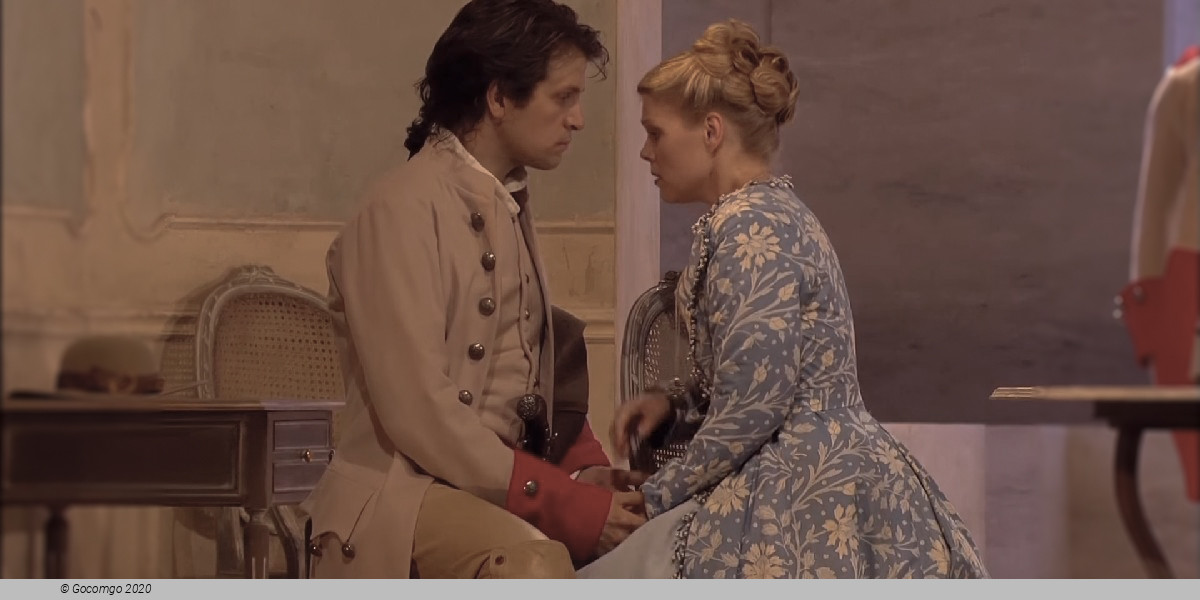
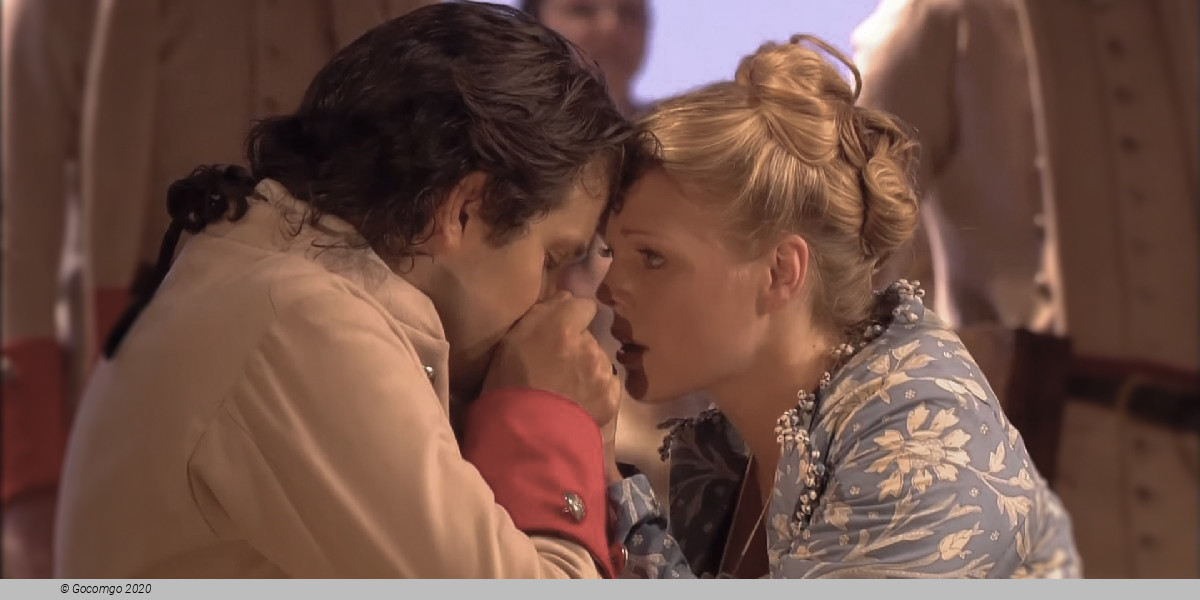
Dorabella admits her indiscretion to Fiordiligi ("È amore un ladroncello"—"Love is a little thief"). Fiordiligi, upset by this development, decides to go to the army and find her betrothed. Before she can leave, though, Ferrando arrives and continues his attempted seduction. Fiordiligi finally succumbs and falls into his arms (duet: "Fra gli amplessi"—"In the embraces"). Guglielmo is distraught while Ferrando turns Guglielmo's earlier gloating back on him. Alfonso, winner of the wager, tells the men to forgive their fiancées. After all: "Così fan tutte"—"All women are like that".

Scene 4:

The scene begins as a double wedding for the sisters and their "Albanian" grooms. Despina, in disguise as a notary, presents the marriage contract, which all sign. Directly thereafter, military music is heard in the distance, indicating the return of the officers. Alfonso confirms the sisters' fears: Ferrando and Guglielmo are on their way to the house. The "Albanians" hurry off to hide (actually, to change out of their disguises). They return as the officers, professing their love. Alfonso drops the marriage contract in front of the officers, and, when they read it, they become enraged. They then depart and return moments later, half in Albanian disguise, half as officers. Despina has been revealed to be the notary, and the sisters realize they have been duped. All is ultimately forgiven, as the entire group praises the ability to accept life's unavoidable good times and bad times.

Venue Info

Grosses Festspielhaus - Salzburg
Location   Hofstallgasse 1

The plans for a Grosses Festspielhaus (Large Festival Hall), where the former archiepiscopal princely stables were located, were drawn up primarily by the architect Clemens Holzmeister; Herbert von Karajan also made many suggestions for the building project, in particular regarding the design of the theatre hall. Every effort was made and no expense spared so as to “insert” between the three-centuries-old façade of the former court stables and the Mönchsberg a theatre with an opera stage whose structure and technical equipment would still meet highest international demands after fifty years. Between autumn 1956 and the early summer of 1960, 55,000 cubic metres of rock were blasted away to create the relevant space. The building was largely financed from the state budget and as a result the Republic of Austria is the owner of the Grosses Festspielhaus.

The Grosses Festspielhaus was opened on 26 July 1960 with a festive ceremony and the performance of Der Rosenkavalier by Richard Strauss conducted by Herbert von Karajan. Even though the new stage was undoubtedly impressive in its dimensions, voices were raised even then expressing regret that it would hardly be suitable for staging operas by Mozart which require a more intimate setting. The ground plan of the auditorium is almost square, nearly 35 metres long and from the stalls as well as from the circle offers ideal acoustic conditions and sight-lines for 2,179 seats. The iron stage curtain weighs 34 tonnes and in the middle is one metre thick. The ground steel plates were created by Rudolf Hoflehner; the main curtain behind it was designed by Leo Wollner.

The décor for the concert hall was renewed in 1993 by Richard Peduzzi. Five bronze doors with handles designed by Toni Schneider-Manzell allow the public access from the Hofstallgasse. The façade is ornamented by a Latin inscription by the Benedictine monk Professor Thomas Michels (Order of St. Benedict): Sacra camenae domus concitis carmine patet quo nos attonitos numen ad auras ferat (The holy house of the muse is open for lovers of the arts, may divine power inspire us and raise us to the heights).

Mostly local materials were used for fitting out the Grosses Festspielhaus: the reinforced concrete columns in the entrance foyer were covered with the conglomerate rock removed from the wall of the Mönchsberg; the floor is made of Adnet marble. Low beam lighting in the sloping ceiling and panel dishes made of glass from Murano create a solid lighting design. Two sculptures created by Wander Bertoni in Carrara marble represent music and drama. The four large-scale paintings in the form of crosses on the theme Dreams with the Wrong Solutions, which were bought by the Austrian patron of the arts and collector Karlheinz Essl and made available on loan to the Salzburg Festival, are by the New York painter and sculptor Robert Longo (1993).

The interval hall adjoining the entrance foyer is largely based on the original ground plan of the archiepiscopal princely stables. The floor of green serpentine is new and contains mosaics of horses by Kurt Fischer. On the wall is a steel relief by Rudolf Hochlehner entitled Homage to Anton von Webern. Through the arch built by Fischer von Erlach one can look out onto the horse statue and fountain and the Schüttkasten which was acquired by the Salzburg Festival in 1987. A separate access on the left of the interval foyer leads via an escalator and steps to the underground car park for the old town centre of Salzburg.

The furnishings for a Patrons’ Lounge on the first floor of the Grosses Festspielhaus were financed by the American patrons of the arts Donald and Jeanne Kahn, who later became major sponsors of the Salzburg Festival. Since 1995 it has served as a reception area for patrons, sponsors as well as their guests and is also used for press conferences and various other functions in connection with the Salzburg Festival.

Important Info
Type: Opera
City: Salzburg, Austria
Starts at: 18:30
Acts: 2
Duration: 2h 15min
Sung in: Italian
Titles in: German,Italian
Top of page