
Grosses Festspielhaus tickets 29 July 2026 - Werther (Concert performance) | GoComGo.com

Werther (Concert performance)

Grosses Festspielhaus, Salzburg, Austria
All photos (6)
Select date and time
7 PM
From
US$ 86

E-tickets: Print at home or at the box office of the event if so specified. You will find more information in your booking confirmation email.

You can only select the category, and not the exact seats.
If you order 2 or 3 tickets: your seats will be next to each other.
If you order 4 or more tickets: your seats will be next to each other, or, if this is not possible, we will provide a combination of groups of seats (at least in pairs, for example 2+2 or 2+3).

Important Info
Type: Opera in Concert
City: Salzburg, Austria
Starts at: 19:00
Acts: 4
Sung in: French
Titles in: German,English

E-tickets: Print at home or at the box office of the event if so specified. You will find more information in your booking confirmation email.

You can only select the category, and not the exact seats.
If you order 2 or 3 tickets: your seats will be next to each other.
If you order 4 or more tickets: your seats will be next to each other, or, if this is not possible, we will provide a combination of groups of seats (at least in pairs, for example 2+2 or 2+3).

Cast
Performers
Tenor: Benjamin Bernheim (Werther)
Conductor: Alain Altinoglu
Mezzo-Soprano: Adèle Charvet (Charlotte)
Baritone: Andrey Zhilikhovsky (Albert)
Orchestra: La Monnaie Symphony Orchestra
Choir: Salzburg Festival and Theater Children's Choir
Soprano: Sandra Hamaoui (Sophie)
Creators
Composer: Jules Massenet
Librettist: Édouard Blau
Librettist: Georges Hartmann
Librettist: Paul Milliet
Festival

Salzburg Festival Summer 2026

The Salzburg Festival Summer 2026 invites you into a world where music, theatre, and emotion merge into one unforgettable cultural journey. From July 17 to August 30, 2026, the baroque city of Salzburg becomes a living stage, hosting more than a hundred performances across historic venues, where every evening feels like a premiere of beauty itself.

Overview

In his autobiography, Jules Massenet describes a journey through Germany that he made with his publisher Georges Hartmann in 1886. When they reached Wetzlar, the setting of Goethe’s The Sorrows of Young Werther, Hartmann presented the composer with a yellowed copy of this novel, and Massenet ‘could not stop reading those burning letters full of the most intense passion’.

This account of how the opera Werther came about is romanticized – in fact, Massenet had begun work on it the previous year, 1885 – though it also neatly echoes the unreal idyll in which Werther first encounters Charlotte, the eldest daughter of a local official, Le Bailli. Despite it being only July, Le Bailli is busy rehearsing a Christmas carol with his children – for whom Charlotte has assumed the role of her deceased mother. Charlotte and Werther attend a ball, after which he effusively confesses his feelings: he’d gladly give up his life if it meant he could be with her. But when he learns that she is engaged to Albert, Werther storms off. He doesn’t return to Wetzlar until after the couple’s wedding, and continues to hope that he and Charlotte might remain friends. But his love has become an obsession to which he repeatedly succumbs, and when Charlotte reads his passionate letters, she realizes that she, too, has feelings for him. On Christmas Day, Werther asks Albert for his pistols. Charlotte rushes to him. But it is too late, and Werther dies in her arms.

In his operatic version of Goethe’s novel, Massenet subtly illuminates the psychology of the convoluted relationships that emerge between Werther, Charlotte and Albert. He is especially successful in depicting the sharp contrasts between the plot’s tragic nature and its idyllic setting. The hero’s suicide was the main reason that the premiere could not be staged in Paris. In the end, it was the Vienna Court Opera that first accepted Werther in 1892. It enjoyed a brilliant premiere and remains one of the most successful operas in the French repertory.

David Treffinger

Translation: Chris Walton

History
Premiere of this production: 16 February 1892, Hofoper, Vienna (in German)

Werther is an opera (drame lyrique) in four acts by Jules Massenet to a French libretto by Édouard Blau, Paul Milliet and Georges Hartmann (who used the pseudonym Henri Grémont). It is loosely based on the German epistolary novel The Sorrows of Young Werther by Johann Wolfgang von Goethe, which was based both on fact and on Goethe's own early life. Earlier examples of operas using the story were made by Kreutzer (1792) and Pucitta (1802).

Synopsis

Time: Within the period July to December, in an undefined year in the 1780s.
Place: Wetzlar in Germany.

Act 1

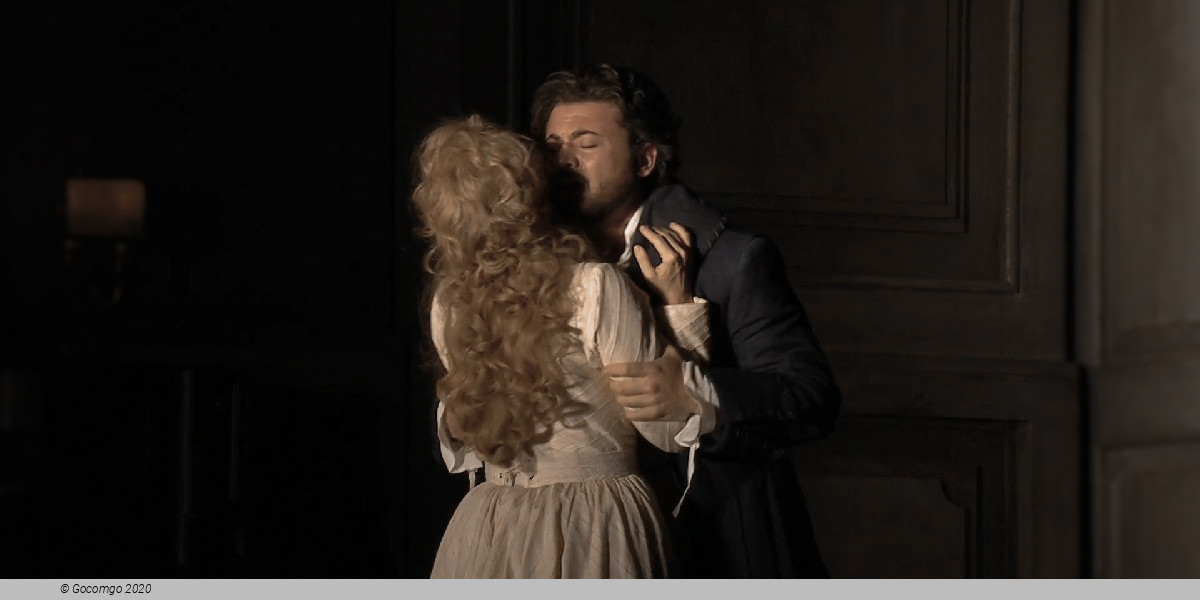
In July, the widowed Bailiff (a Magistrate, rather than one who comes to seize property), is teaching his six youngest children a Christmas carol ("Noël! Jésus vient de naître"). His drinking companions, Johann and Schmidt, arrive as Charlotte, the eldest daughter, dresses for a ball. Since her fiancé Albert is away, she is to be escorted by Werther, whom the Bailiff and his companions find gloomy. Werther arrives ("O Nature, pleine de grâce"), and watches as Charlotte prepares her young siblings' supper, just as her mother had before she died. He greets her and they leave for the ball. Albert returns unexpectedly after a six-month trip. He is unsure of Charlotte's intentions and disappointed not to find her at home, but is reassured and consoled by Charlotte's younger sister Sophie. He leaves after promising to return in the morning. After an orchestral interlude, Werther and Charlotte return very late; he is already enamoured of her. His declaration of love is interrupted by the announcement of Albert's return. Charlotte recalls how she promised her dying mother she would marry Albert. Werther is in despair.

Act 2

It is three months later, and Charlotte and Albert are now married. They walk happily to church to celebrate the minister's 50th wedding anniversary, followed by the disconsolate Werther ("Un autre est son époux!"). First Albert and then Sophie ("Du gai soleil, plein de flamme") try to cheer him up. When Charlotte exits the church, he speaks to her of their first meeting. Charlotte begs Werther to leave her, though she indicates that she would be willing to receive him again on Christmas Day. Werther contemplates suicide ("Lorsque l'enfant revient d'un voyage"). He encounters Sophie but the tearful girl does not understand his distressing behavior. Albert now realizes that Werther loves Charlotte.

Act 3

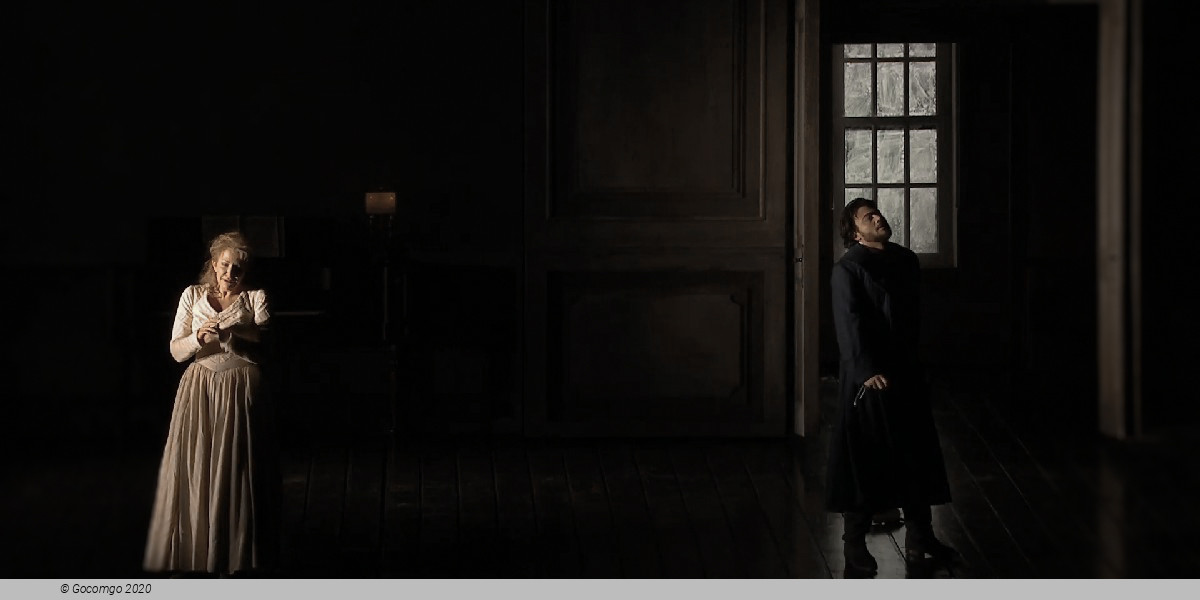
Charlotte is at home alone on Christmas Eve. She spends time rereading the letters that she has received from Werther ("Werther! Qui m'aurait dit ... Ces lettres!"), wondering how the young poet is and how she had the strength to send him away. Sophie comes in and tries to cheer up her older sister ("Ah! le rire est béni"), though Charlotte is not to be consoled ("Va! laisse couler mes larmes"). Suddenly Werther appears, and while he reads to her some poetry of Ossian ("Pourquoi me réveiller?"), he realizes that she does indeed return his love. They embrace for a moment, but she quickly bids him farewell. He leaves with thoughts of suicide. Albert returns home to find his wife distraught. Werther sends a messenger to Albert, requesting to borrow his pistols, explaining he is going on an extended trip. After the servant has taken them, Charlotte has a terrible premonition and hurries to find Werther. An orchestral intermezzo ("La nuit de Noël") leads without a break into the final Act.

Act 4

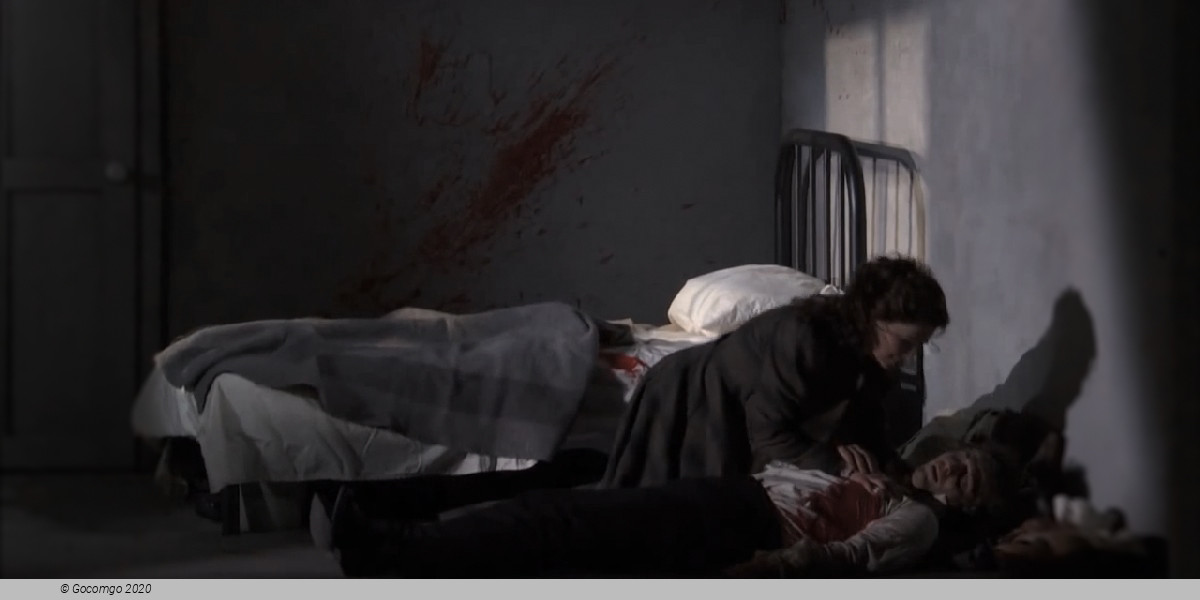
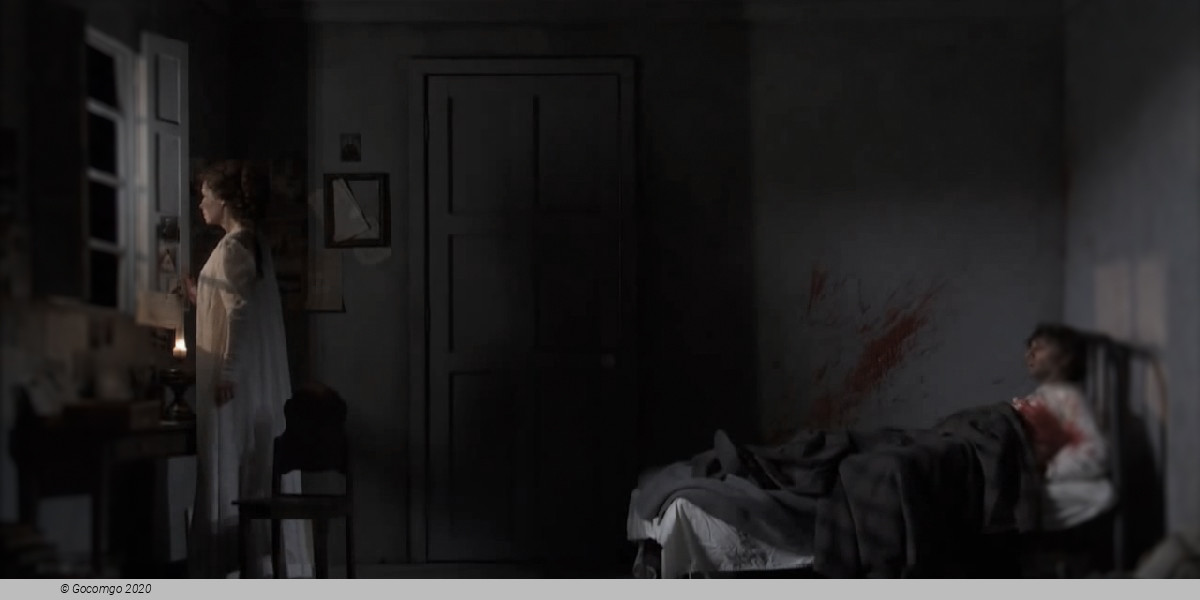
"The death of Werther": At Werther's apartment, Charlotte has arrived too late to stop him from shooting himself; he is dying. She consoles him by declaring her love. He asks for forgiveness. After he dies, Charlotte faints. Outside children are heard singing the Christmas carol.

Venue Info

Grosses Festspielhaus - Salzburg
Location   Hofstallgasse 1

The plans for a Grosses Festspielhaus (Large Festival Hall), where the former archiepiscopal princely stables were located, were drawn up primarily by the architect Clemens Holzmeister; Herbert von Karajan also made many suggestions for the building project, in particular regarding the design of the theatre hall. Every effort was made and no expense spared so as to “insert” between the three-centuries-old façade of the former court stables and the Mönchsberg a theatre with an opera stage whose structure and technical equipment would still meet highest international demands after fifty years. Between autumn 1956 and the early summer of 1960, 55,000 cubic metres of rock were blasted away to create the relevant space. The building was largely financed from the state budget and as a result the Republic of Austria is the owner of the Grosses Festspielhaus.

The Grosses Festspielhaus was opened on 26 July 1960 with a festive ceremony and the performance of Der Rosenkavalier by Richard Strauss conducted by Herbert von Karajan. Even though the new stage was undoubtedly impressive in its dimensions, voices were raised even then expressing regret that it would hardly be suitable for staging operas by Mozart which require a more intimate setting. The ground plan of the auditorium is almost square, nearly 35 metres long and from the stalls as well as from the circle offers ideal acoustic conditions and sight-lines for 2,179 seats. The iron stage curtain weighs 34 tonnes and in the middle is one metre thick. The ground steel plates were created by Rudolf Hoflehner; the main curtain behind it was designed by Leo Wollner.

The décor for the concert hall was renewed in 1993 by Richard Peduzzi. Five bronze doors with handles designed by Toni Schneider-Manzell allow the public access from the Hofstallgasse. The façade is ornamented by a Latin inscription by the Benedictine monk Professor Thomas Michels (Order of St. Benedict): Sacra camenae domus concitis carmine patet quo nos attonitos numen ad auras ferat (The holy house of the muse is open for lovers of the arts, may divine power inspire us and raise us to the heights).

Mostly local materials were used for fitting out the Grosses Festspielhaus: the reinforced concrete columns in the entrance foyer were covered with the conglomerate rock removed from the wall of the Mönchsberg; the floor is made of Adnet marble. Low beam lighting in the sloping ceiling and panel dishes made of glass from Murano create a solid lighting design. Two sculptures created by Wander Bertoni in Carrara marble represent music and drama. The four large-scale paintings in the form of crosses on the theme Dreams with the Wrong Solutions, which were bought by the Austrian patron of the arts and collector Karlheinz Essl and made available on loan to the Salzburg Festival, are by the New York painter and sculptor Robert Longo (1993).

The interval hall adjoining the entrance foyer is largely based on the original ground plan of the archiepiscopal princely stables. The floor of green serpentine is new and contains mosaics of horses by Kurt Fischer. On the wall is a steel relief by Rudolf Hochlehner entitled Homage to Anton von Webern. Through the arch built by Fischer von Erlach one can look out onto the horse statue and fountain and the Schüttkasten which was acquired by the Salzburg Festival in 1987. A separate access on the left of the interval foyer leads via an escalator and steps to the underground car park for the old town centre of Salzburg.

The furnishings for a Patrons’ Lounge on the first floor of the Grosses Festspielhaus were financed by the American patrons of the arts Donald and Jeanne Kahn, who later became major sponsors of the Salzburg Festival. Since 1995 it has served as a reception area for patrons, sponsors as well as their guests and is also used for press conferences and various other functions in connection with the Salzburg Festival.

Important Info
Type: Opera in Concert
City: Salzburg, Austria
Starts at: 19:00
Acts: 4
Sung in: French
Titles in: German,English
Top of page