

Royal Opera of Versailles (Palace of Versailles) tickets 29 January 2027 - Jean-Philippe Rameau "Pygmalion" Christoph Willibald Gluck "Le Cadi dupé" | GoComGo.com

Jean-Philippe Rameau "Pygmalion" Christoph Willibald Gluck "Le Cadi dupé"

Royal Opera of Versailles (Palace of Versailles), Royal Opera, Paris, France
All photos (3)
Select date and time
8 PM
From
US$ 120

E-tickets: Print at home or at the box office of the event if so specified. You will find more information in your booking confirmation email.

You can only select the category, and not the exact seats.
If you order 2 or 3 tickets: your seats will be next to each other.
If you order 4 or more tickets: your seats will be next to each other, or, if this is not possible, we will provide a combination of groups of seats (at least in pairs, for example 2+2 or 2+3).

Important Info
Type: Opera - Ballet
City: Paris, France
Starts at: 20:00
Acts: 2
Intervals: 1
Sung in: French
Titles in: English,French

E-tickets: Print at home or at the box office of the event if so specified. You will find more information in your booking confirmation email.

You can only select the category, and not the exact seats.
If you order 2 or 3 tickets: your seats will be next to each other.
If you order 4 or more tickets: your seats will be next to each other, or, if this is not possible, we will provide a combination of groups of seats (at least in pairs, for example 2+2 or 2+3).

Cast
Performers
Bass: Alexandre Adra
Mezzo-Soprano: Camille Brault
Soprano: Clara Penalva
Tenor: Mathias Vidal
Orchestra: Royal Opera of Versailles Orchestra
Soprano: Sarah Charles
Baritone: Timothée Varon
Creators
Composer: Christoph Willibald Gluck
Composer: Jean-Philippe Rameau
Designer: Antoine Fontaine
Lighting Designer: Christophe Chaupin
Stage Director: Jean-Romain Vesperini
Overview

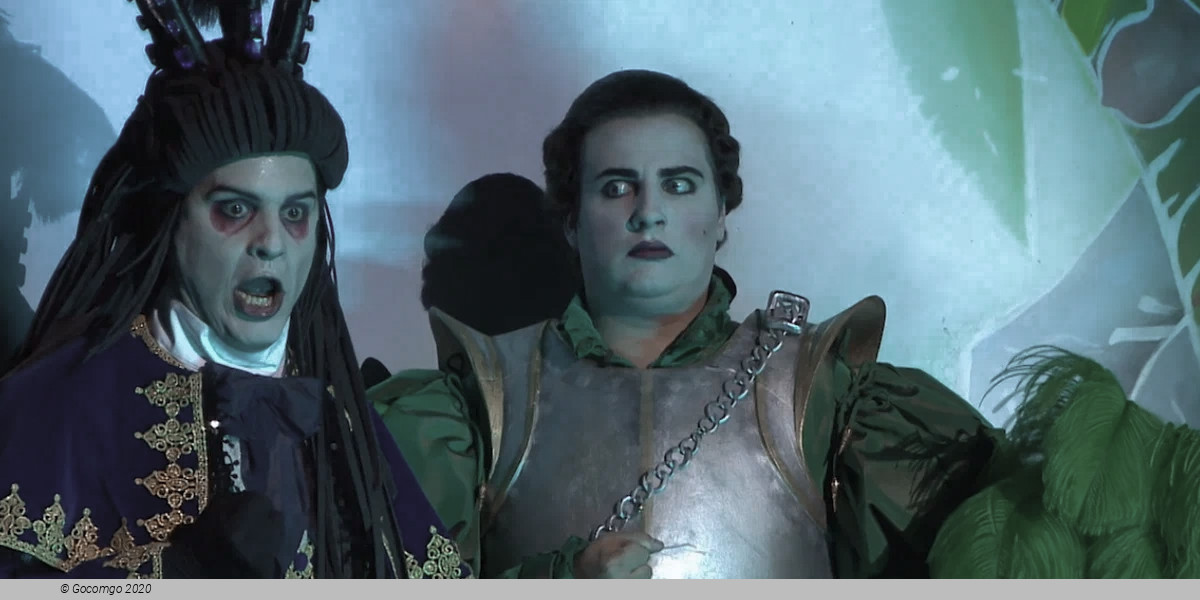
Pygmalion by Jean-Philippe Rameau and The Deceived Cadi by Christoph Willibald Gluck present two contrasting one-act works, blending French lyric ballet and comic opera in a program full of elegance, wit, and theatrical charm.

This program brings together two one-act stage works that reflect different traditions of 18th-century musical theatre.

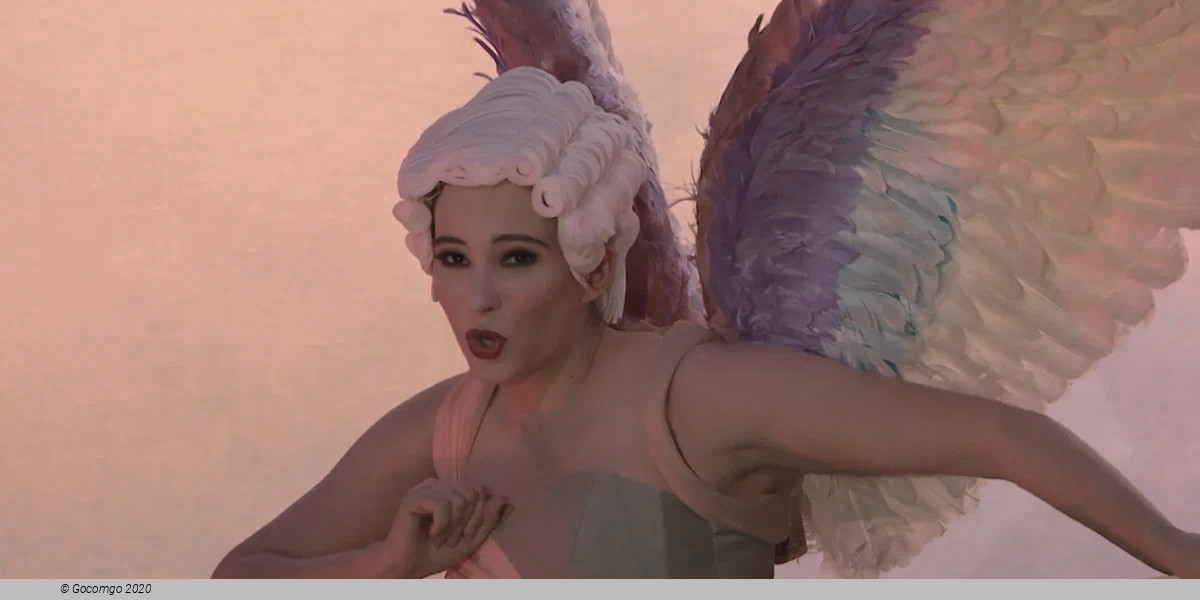
Pygmalion by Jean-Philippe Rameau, created in 1748 at the Royal Academy of Music, is a ballet act based on a libretto by Ballot de Sauvot. Inspired by the classical myth, the work combines expressive dance, refined vocal writing, and rich orchestration, characteristic of the French lyric tradition.

In contrast, The Deceived Cadi by Christoph Willibald Gluck, premiered in 1761 at Vienna’s Burgtheater, is a comic opera in one act with a libretto by Pierre-René Lemonnier. Light in tone and driven by theatrical situations, the piece reflects Gluck’s early engagement with operatic comedy, before his later reforms of the genre.

Together, these works highlight two distinct approaches to musical storytelling—one rooted in elegance and mythological expression, the other in humor and dramatic immediacy—offering a varied and engaging glimpse into 18th-century stage art.

Venue Info

Royal Opera of Versailles (Palace of Versailles) - Paris
Location   3 Place Léon Gambetta, Versailles

The Royal Opera of Versailles is the main theatre and opera house of the Palace of Versailles. The Royal Opera is one of the greatest works by the architect Ange-Jacques Gabriel. Inaugurated in 1770 during the reign of Louis XV, it was at the time the largest concert hall in Europe, and was also a great technical achievement and an impressive feat of decorative refinement. A theatre for monarchic and then republican life, it has hosted celebrations, shows and parliamentary debates.

Designed by Ange-Jacques Gabriel, it is also known as the Théâtre Gabriel. The interior decoration by Augustin Pajou is constructed almost entirely of wood, painted to resemble marble in a technique known as faux marble. The excellent acoustics of the opera house is at least partly due to its wooden interior.

The house is located at the northern extremity of the north wing of the palace. General public access to the theater is gained through the two-story vestibule. Some parts of the Opéra, such as the King's Loge and the King's Boudoir represent some of the earliest expressions of what would become known as the Louis XVI style.

Lully’s Persée — written in 1682, the year Louis XIV moved into the palace — inaugurated the Opéra on 16 May 1770 in celebration of the marriage of the dauphin — the future Louis XVI — to Marie Antoinette.

The Opéra Royal can serve either as a theater for opera, stage plays, or orchestral events, when it can accommodate an audience of 712 or as a ballroom when the floor of the orchestra level of the auditorium can be raised to the level of the stage. On these occasions, the Opéra can accommodate 1,200.

Important Info
Type: Opera - Ballet
City: Paris, France
Starts at: 20:00
Acts: 2
Intervals: 1
Sung in: French
Titles in: English,French
Top of page